
What is a cookie biscuit?
What a cookie is, where the word comes from, how to tell one from a biscuit, and what makes one soft and gooey rather than crisp.
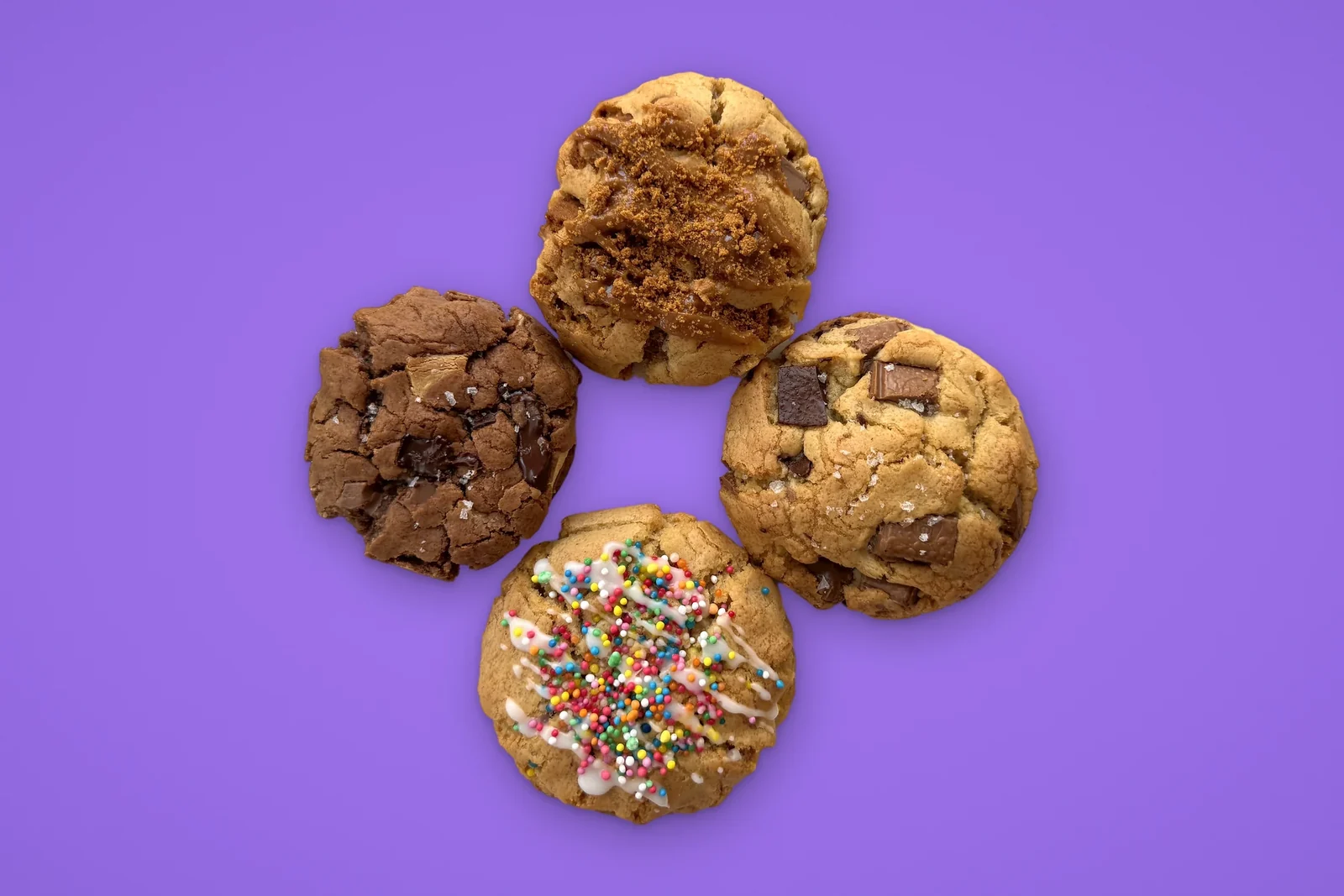
A cookie is a sweet biscuit with a lot of sugar and fat in it. In Australia, "biscuit" usually means the crisp kind you dunk in a cuppa, and "cookie" means the bigger, softer, chewier kind, such as a chocolate chunk cookie. So a cookie biscuit is a cookie: one particular kind of biscuit, named for its texture. The rest of this guide covers where the words come from, how to tell the two apart, the main kinds of cookie, and what makes one soft and gooey rather than crisp.
So what is a cookie biscuit?
It depends where you are standing. In the United States and most of Canada, every sweet biscuit is a cookie. In Australia, New Zealand and the United Kingdom, most sweet biscuits are biscuits, and "cookie" is kept for the chewier ones, and above all for the chocolate chip or chocolate chunk kind.
That leaves Australians with two words for one family. A shortbread finger is a biscuit. A gingernut is a biscuit. A thick, soft disc studded with chocolate, the size of your palm, is a cookie, and plenty of people would happily call it either. Neither is wrong. The difference is about texture, not ingredients: both start with flour, sugar and fat.
Where does the word cookie come from?
From Dutch. A koekje is a "little cake", from koek, cake. Dutch settlers took the word to New Amsterdam, the town that became New York, in the 1600s, and by 1808 "cookie" appears in American English for a small, flat, sweet cake. Scotland had a "cookie" too, from 1730, but it meant a plain bun, and word historians are not sure it is the same word.
"Biscuit" took the other road. It comes from Latin by way of Old French, bis and coctus: twice-cooked. Early biscuits were baked and then dried out in a slow oven, so they kept and travelled well. That is the crisp, dry, keeps-in-a-tin idea that "biscuit" still carries in Australia.
Americans kept the word biscuit, but for something else entirely. Order a biscuit in the United States and you get a soft bread roll, something like a scone.
Cookie or biscuit: how do you tell them apart?
Break one. That is the quickest test, and it works on anything in the tin. Here "biscuit" means what most Australians mean by it: the crisp kind.
| Biscuit | Cookie | |
|---|---|---|
| When you break it | Snaps cleanly | Bends, then pulls apart |
| The middle | Crisp right through | Soft or chewy |
| Shape | Usually thin and flat | Usually thicker, often bigger |
| How it is shaped | Often rolled out and cut | Often scooped or rolled into balls |
| With a cuppa | Made for dunking | Usually eaten as it is |
| What Americans call it | A cookie | A cookie |
Dunking does more than soften it. A hot drink dissolves some of the sugar in a biscuit, which lets more of the flavour out and softens it at the same time.
None of these lines is a law. There are crisp cookies and chewy biscuits. But if it snaps, most Australians will call it a biscuit, and if it bends, a cookie.
What are the main kinds of cookie?
Bakers sort cookies by how the dough is shaped, because that decides most of the texture. These are the main families:
- Drop cookies. A soft dough, spooned or scooped onto the tray. It spreads and flattens in the oven. Chocolate chip cookies are the classic.
- Rolled cookies. A stiffer dough, rolled flat and cut with a cutter. Gingerbread people are the classic.
- Moulded cookies. A stiff dough shaped into balls or shapes by hand before baking.
- Refrigerator cookies. A stiff dough chilled hard, usually in a log, then sliced and baked.
- Pressed cookies. A soft dough pushed through a press into fancy shapes.
- Bar cookies. A batter pressed into a tin, baked, then cut into pieces.
- Sandwich cookies. Two cookies stuck together with a sweet filling such as jam or icing.
- No-bake cookies. Cereal, nuts or similar bound with something melted, then left to set.
Ours sit closest to the first family. The dough is soft, it is portioned into balls, and each one is baked into a big, thick cookie. Where we part company with the classic drop cookie is in what happens before the oven.
What makes a cookie soft and gooey rather than crisp?
Mostly method, not a secret ingredient. The same flour, sugar, butter and egg can bake into a thin crisp disc or a thick soft one, depending on three things:
- How the butter goes in. Butter is mostly fat with some water. How it is treated changes both the flavour and how the dough behaves. We brown ours first, which cooks off the water and toasts the milk solids for a nutty, toffee-like flavour. Why we brown the butter explains what happens in the pan.
- How long the dough rests. Rested dough bakes thicker, browner and deeper in flavour. The flour soaks up the liquid and the dough firms up, so it spreads less. Ours rests two days in the fridge.
- How cold it is when it meets the oven. Cold fat takes longer to melt, and the longer it stays solid, the less the cookie spreads. Ours goes into the oven straight from the fridge, so it holds its height and keeps a soft middle.
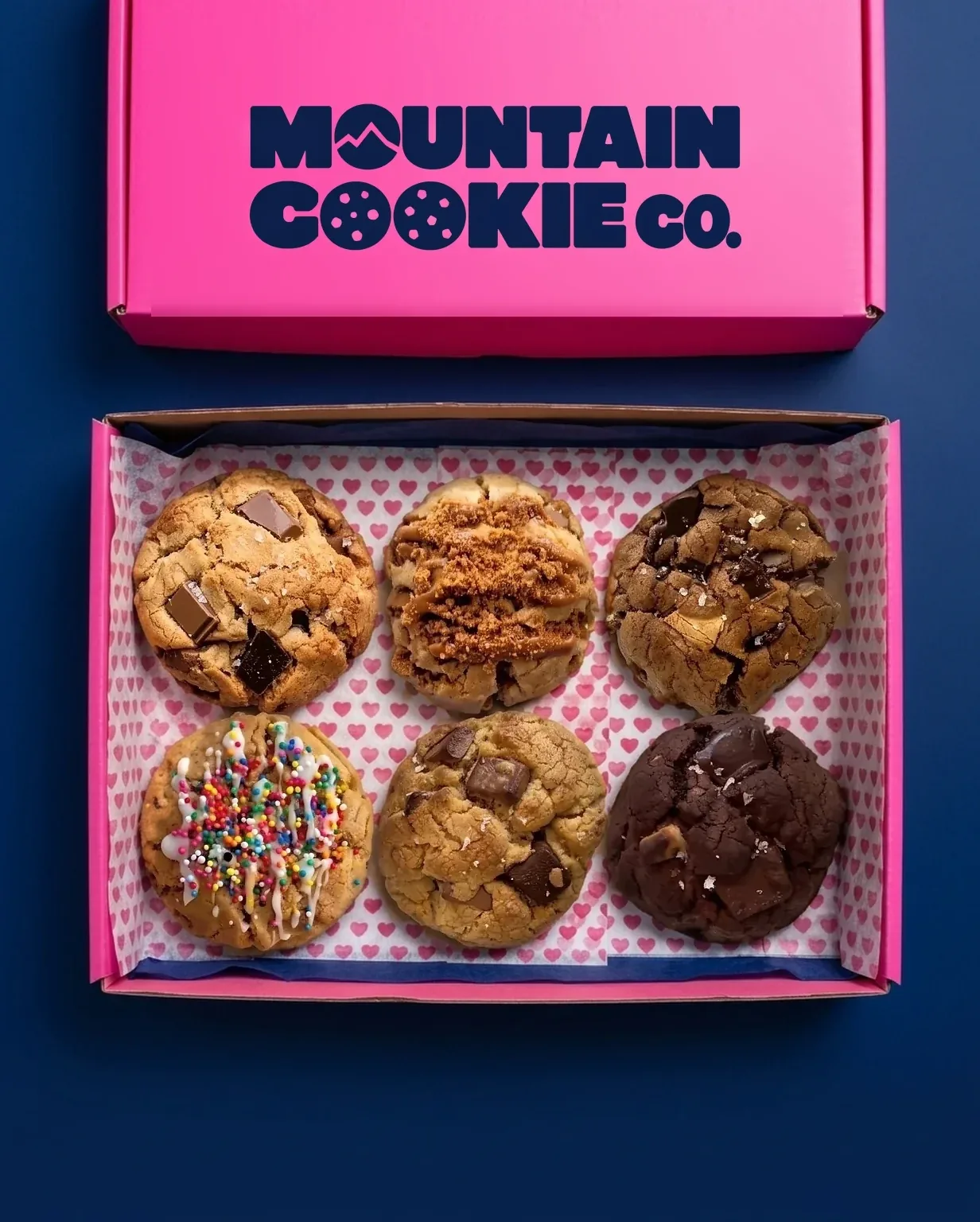
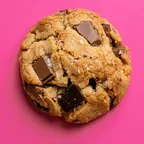
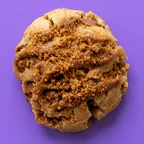
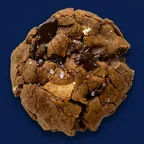
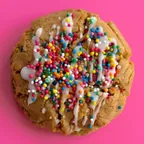
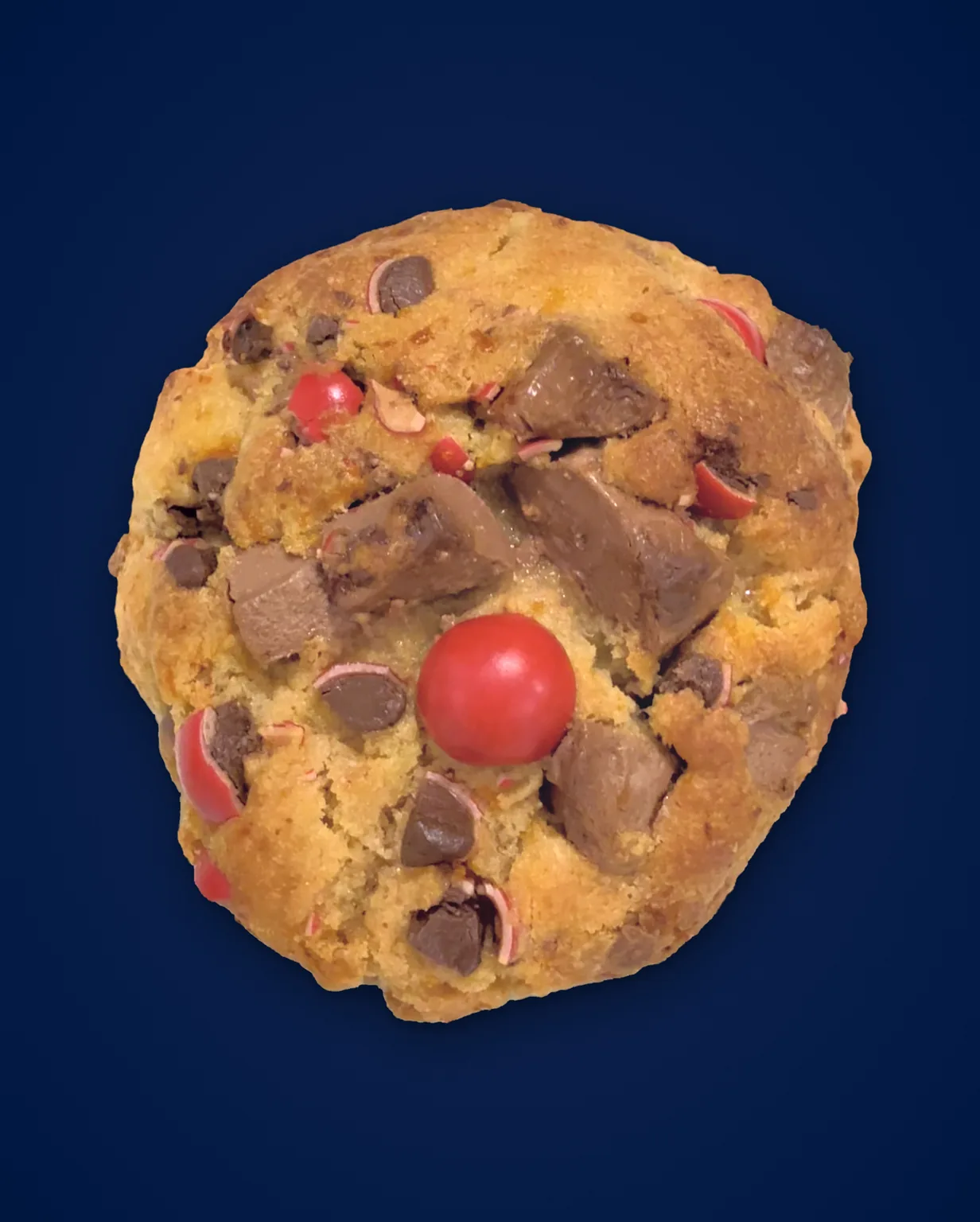
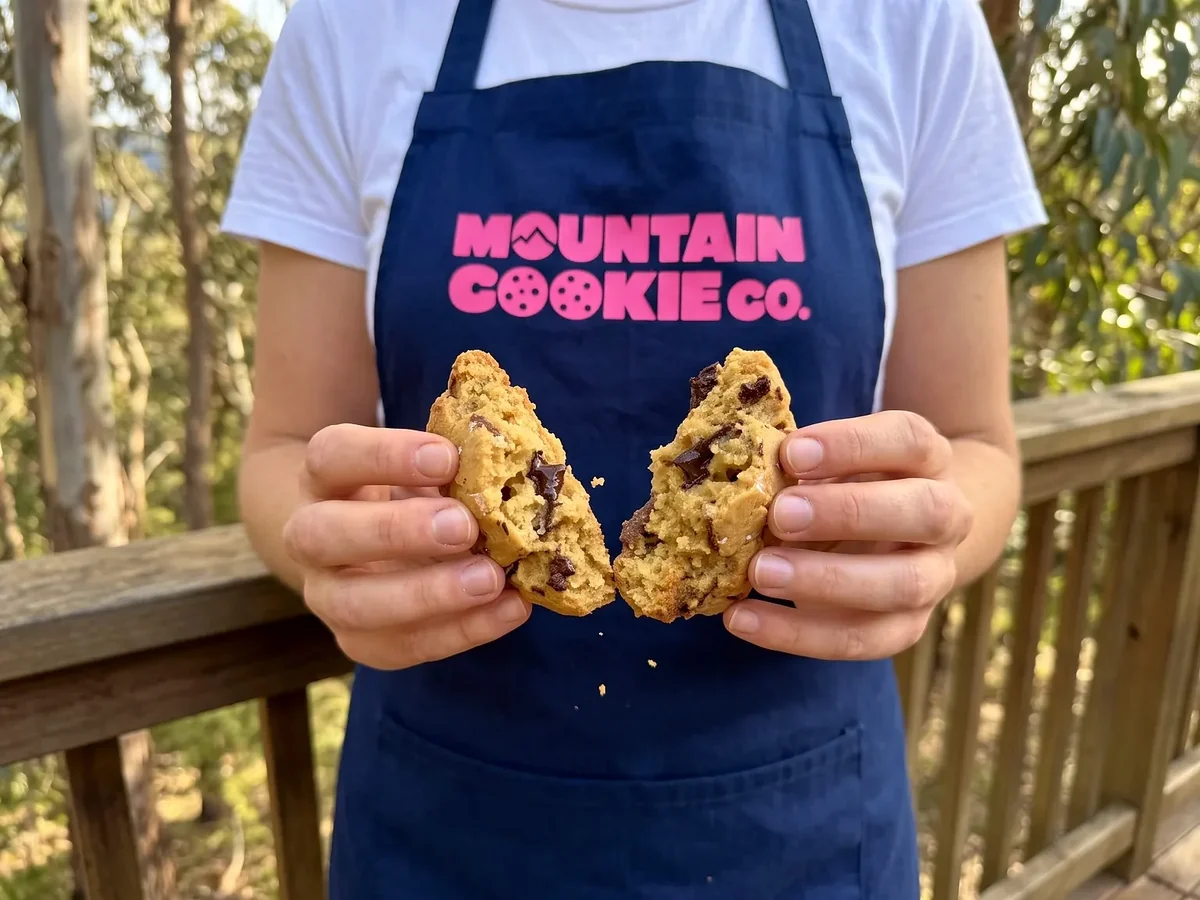
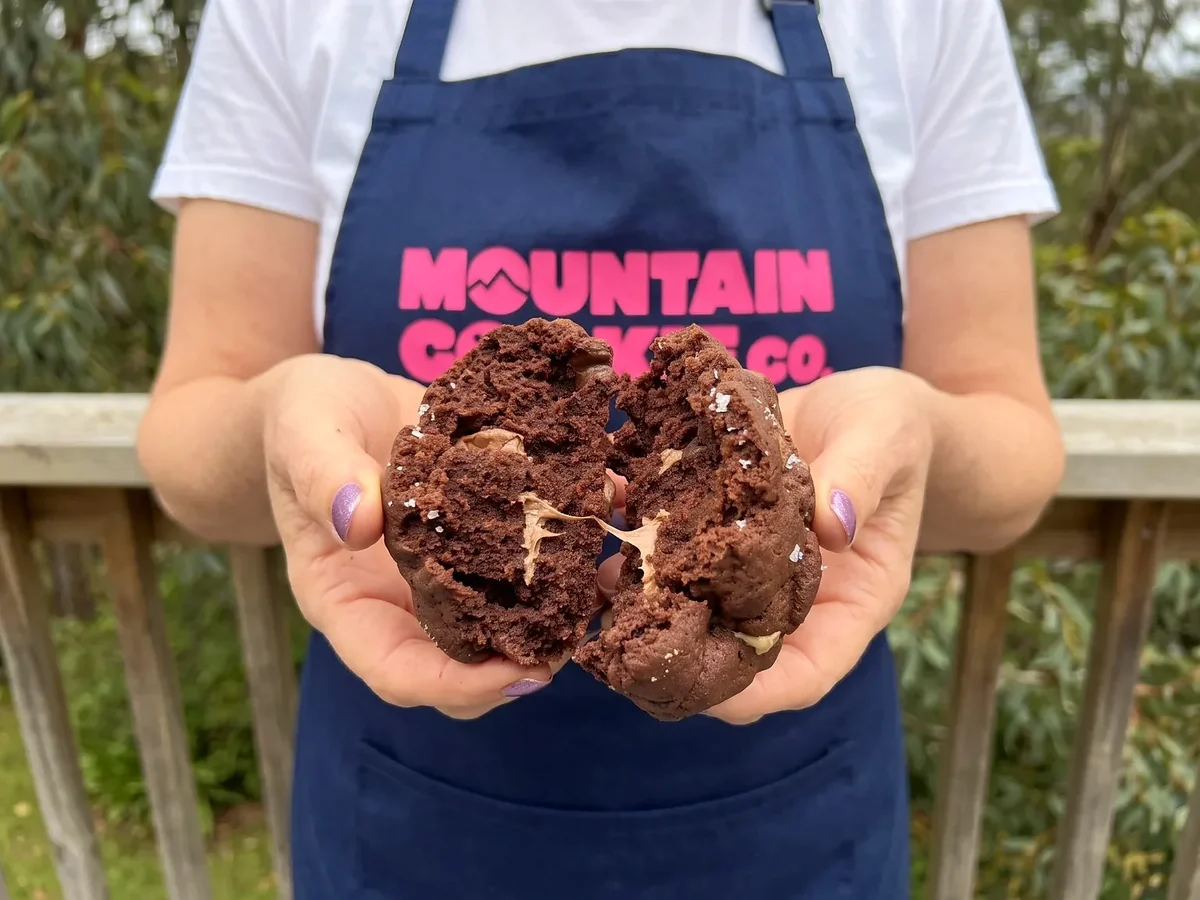
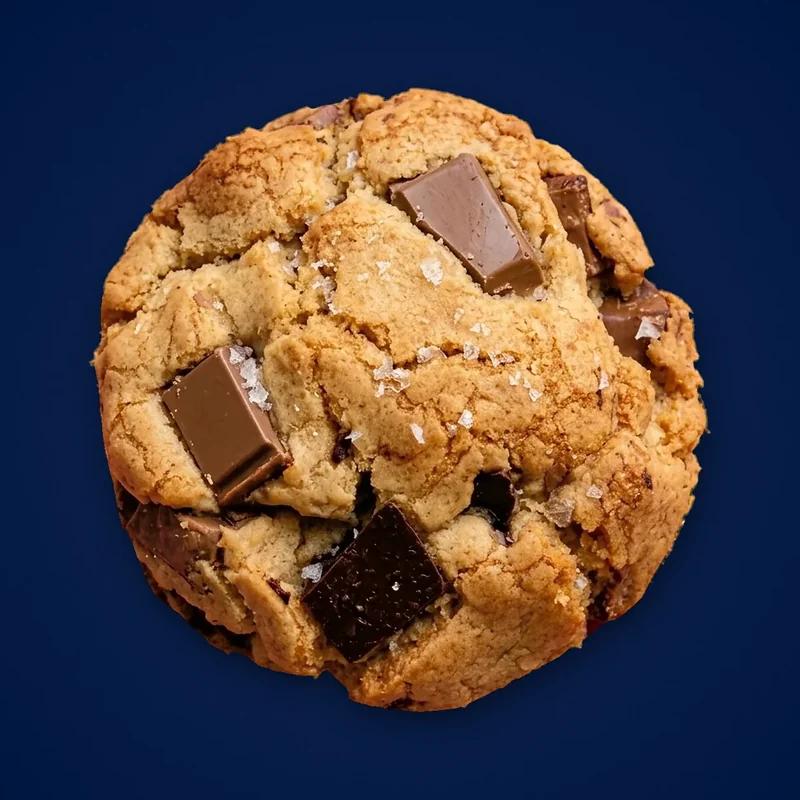
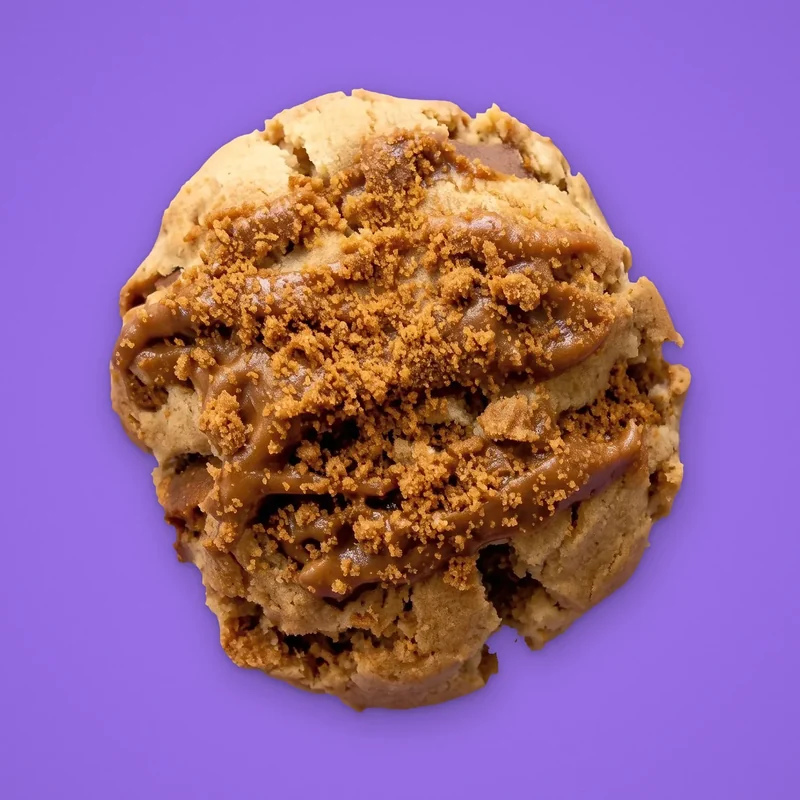
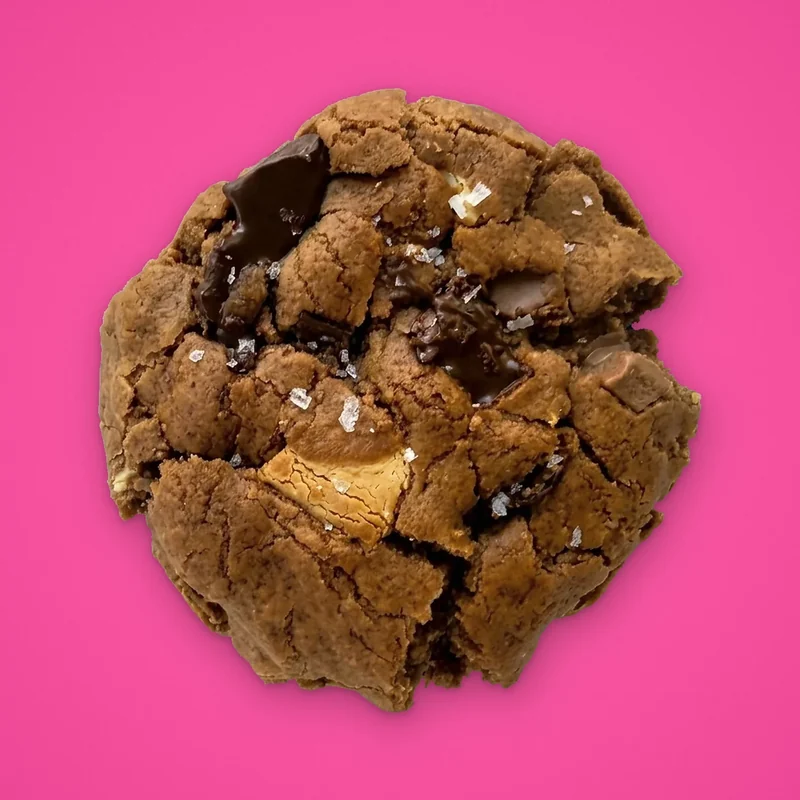
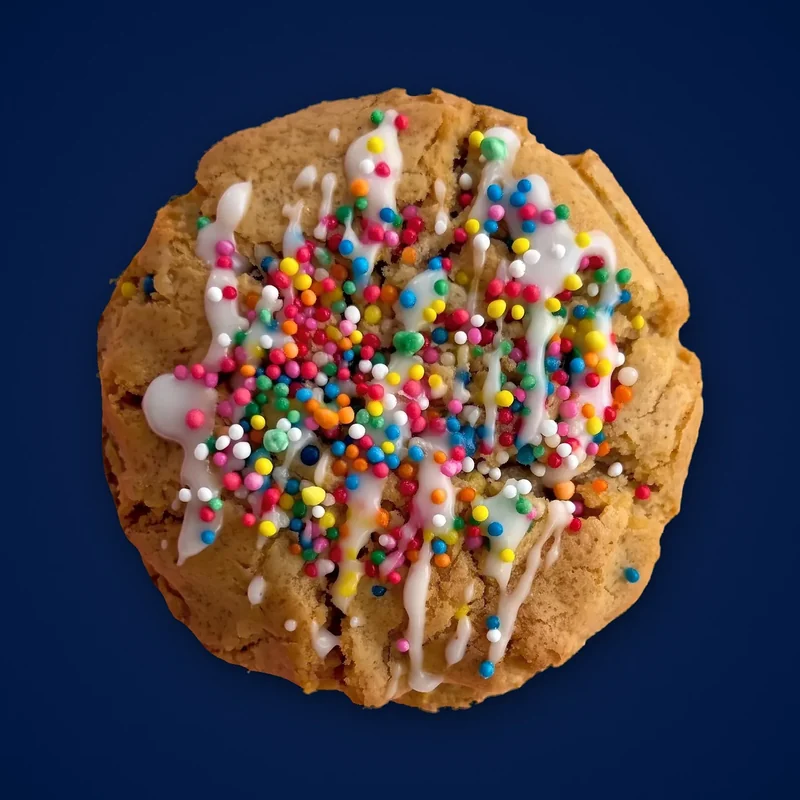
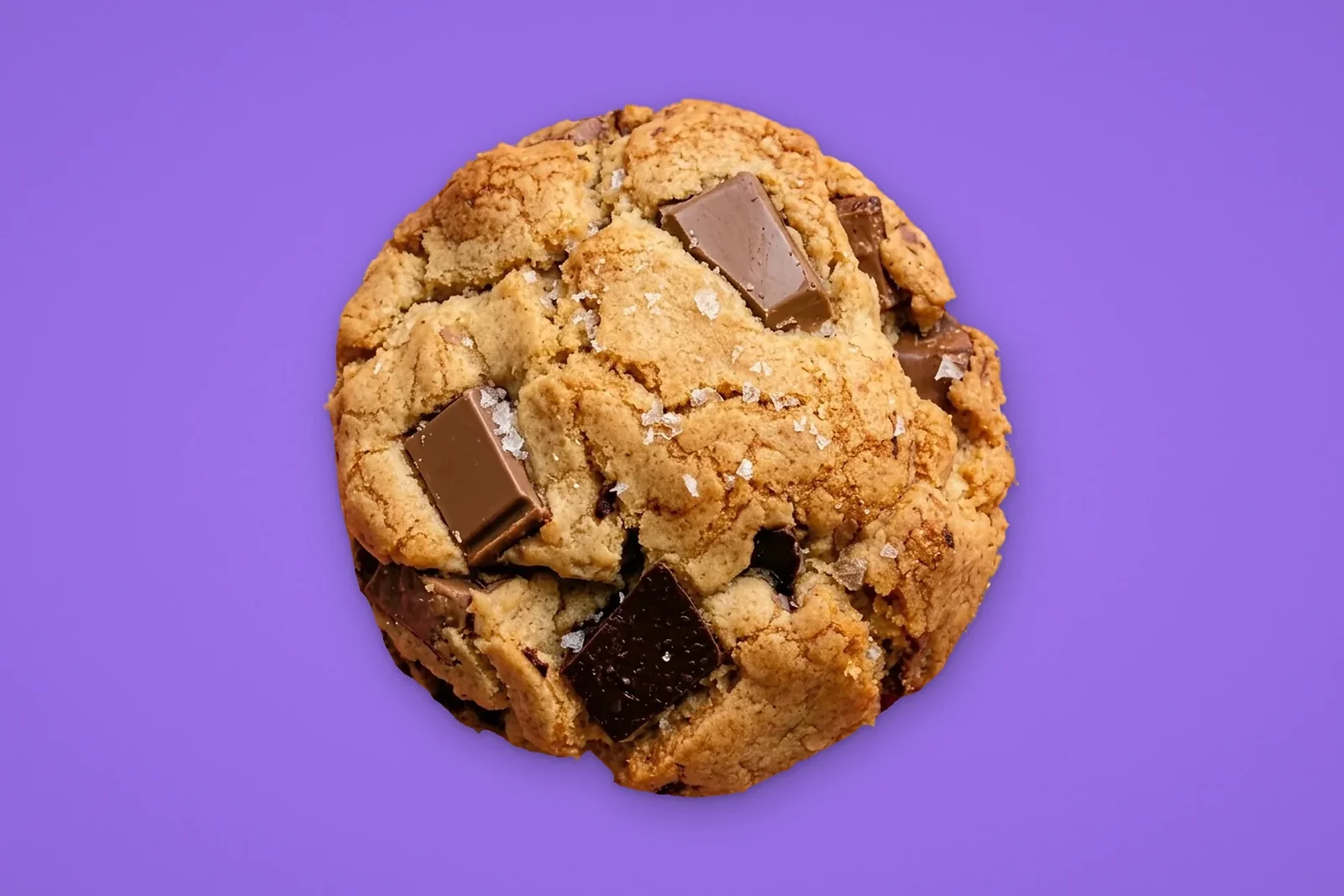
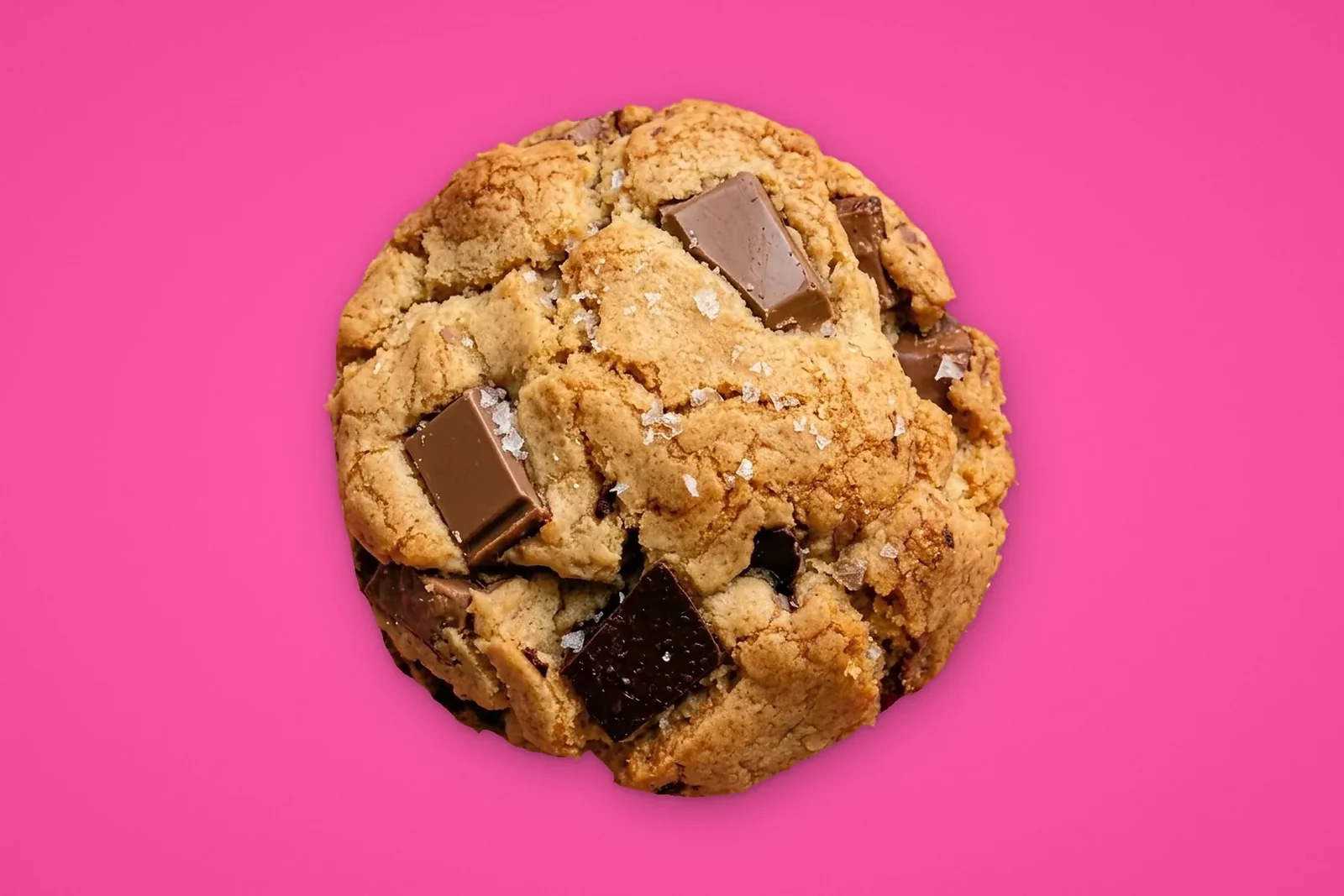
Put the three together and you get the cookie in the photos on this page: big and thick, with a gooey middle that pulls apart. Why are our cookies so tasty? has more on the two-day rest.
Is a cookie better than a biscuit?
Different jobs. A crisp biscuit keeps in a tin and stands up to a dunk. A big, soft cookie is made to be eaten fresh, and it is the whole snack rather than something on the side of a cup of tea.
That is why ours come the way they do. We bake for a delivery morning, not for a shelf. The soft, gooey kind is the only kind we make.
Questions people ask about cookies
Is a cookie a cake? Not quite, although the word means "little cake". A cookie is a kind of biscuit: small, flat and baked one at a time.
Are cookies and biscuits made from the same things? Broadly, yes: flour, sugar, fat, often egg. The proportions and the method decide whether you end up with a snap or a chew.
Why are some cookies so big? Partly style, partly texture. A thicker cookie has more middle, so it stays soft inside while the edges set. Ours are big for exactly that reason. Read what a New York-style cookie is for the style they come from.
How we fit in
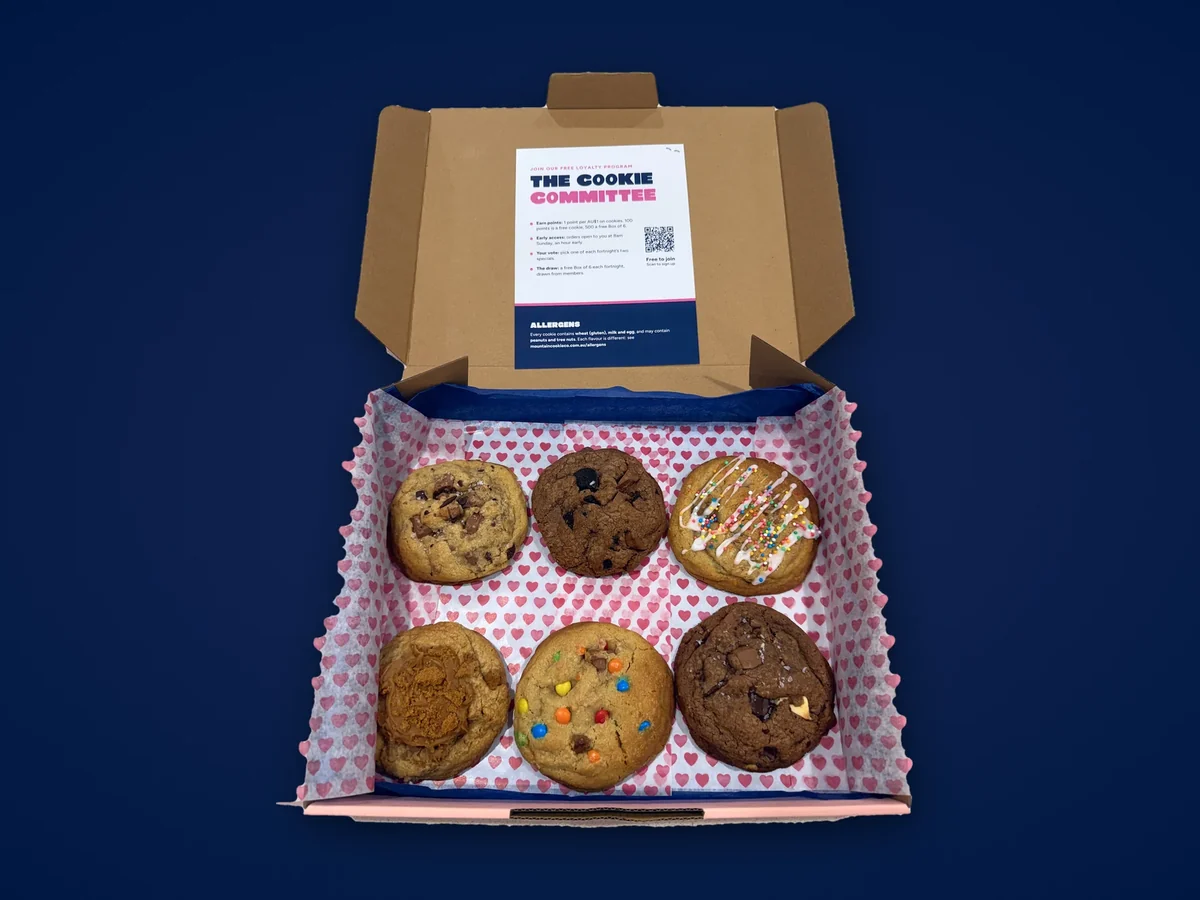
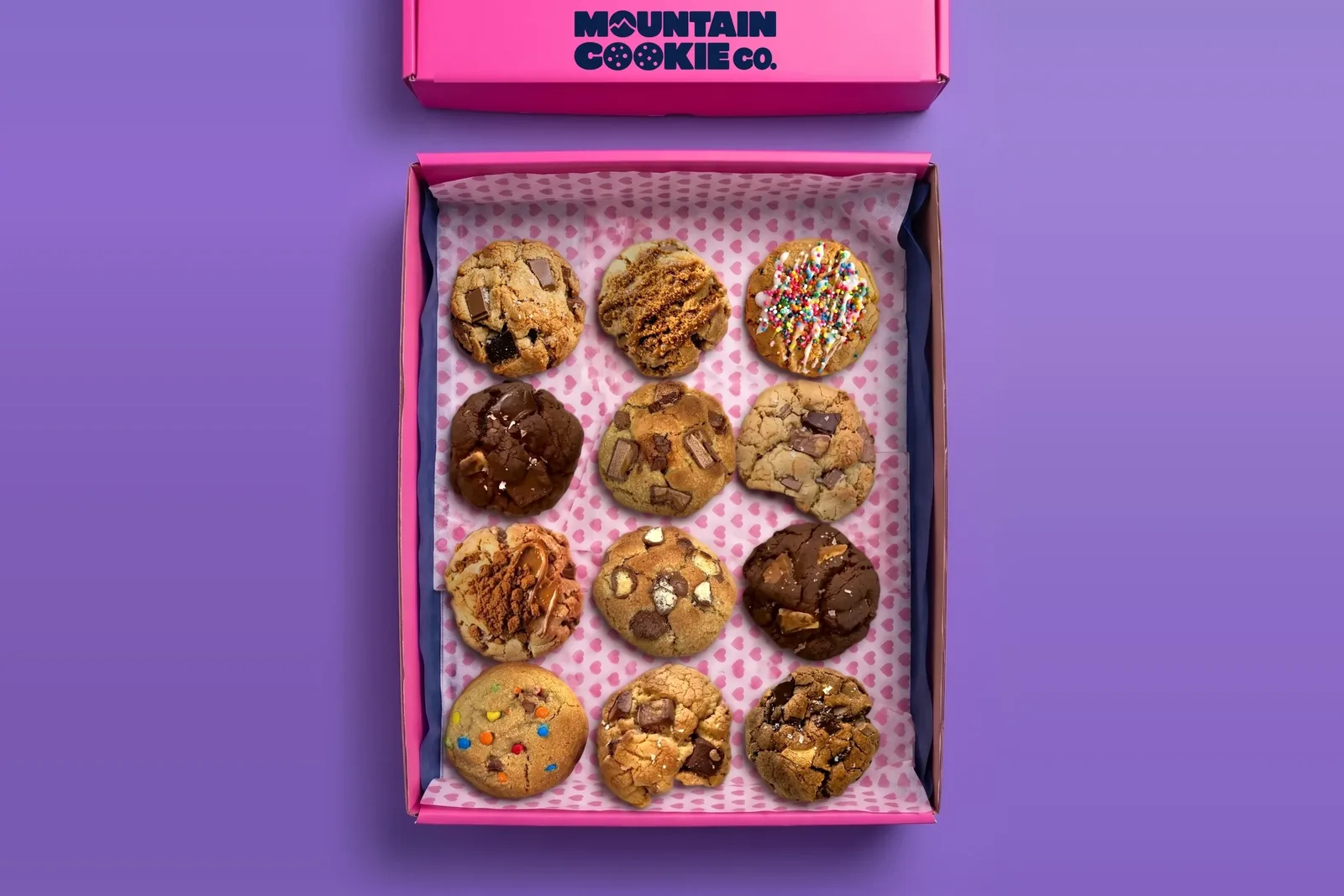
We bake one kind of cookie: big, soft and gooey, with browned butter and a dough that rests two days in the fridge before it goes into the oven cold. Four flavours are always on, The OG, Biscoff®, Triple Chocolate and Birthday Cake, plus two specials each fortnight. Baked in the Blue Mountains and delivered fresh to your door. Order by Tuesday 6pm (Monday 6pm if your box goes by Express Post) and the cart shows the day it arrives. Start at the shop, or read what a New York-style cookie is.
Sources, read 14 November 2026: Wikipedia, Cookie (edited 8 November 2026); Wikipedia, Biscuit (undated); Etymonline, cookie (undated); King Arthur Baking, Chilling cookie dough (updated 6 September 2023).

Questions answered
Do Australians call cookies biscuits?
Mostly, yes. In Australia 'biscuit' is the everyday word for the crisp kind you have with a cuppa, and 'cookie' is used for the bigger, softer, chewier kind, such as a chocolate chunk cookie. A cookie is a kind of sweet biscuit.
What is the difference between a cookie and a biscuit in Australia?
Texture, mostly. A biscuit is usually thin and crisp and snaps when you break it. A cookie is usually bigger and thicker, with a soft or chewy middle that bends and pulls apart.
Cookie or biscuit: which is right in Australia?
Both. Biscuit is the everyday Australian word, and cookie is a kind of biscuit: the big, soft, chewy kind. Call a crisp one a biscuit and a soft, thick one a cookie, and nobody will argue.
Why do Americans call biscuits cookies?
The word came to America with Dutch settlers, from koekje, 'little cake', and stuck. In the United States every sweet biscuit is a cookie, and a 'biscuit' is a soft bread roll, something like a scone.
What kind of cookies do you make?
One kind: big, soft and gooey, made with browned butter and a dough that rests two days in the fridge before it is baked from cold. Four flavours are always on, plus two specials each fortnight.
Can I get your cookies delivered?
Yes. Baked in the Blue Mountains and delivered fresh to your door. Order by Tuesday 6pm, or by Monday 6pm if your box goes by Express Post, and the cart shows the day it arrives at your address.
Keep reading
 Why we brown the butter: what it does to a cookieBrowning butter boils off its water and toasts its milk solids, for a nutty, toffee-like flavour. Why it tastes better, and what it does to a cookie.14 November 2026
 What is a New York-style cookie?Big, thick, crisp at the edge and gooey in the middle. What makes a New York-style cookie, where the style comes from, and how ours fit it.14 October 2026
 Cookies for a morning tea at work: how many to order, and whenHow many boxes to order for a morning tea at work, when to order for a Friday, and how to pick flavours for a mixed group.12 November 2026